
Why global brands must rethink douyin marketing strategy in China?
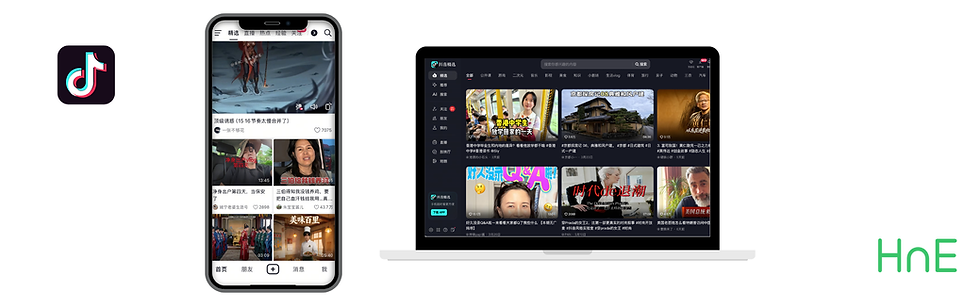
For many international brands, TikTok is already a familiar platform. However, succeeding in China requires a very different Douyin marketing strategy. While TikTok remains largely content and ad-driven, Douyin has evolved into a powerful Interest E-commerce Ecosystem that is reshaping China short video marketing trends.
For brands entering China, the challenge is no longer just visibility. It is about understanding how marketing to Chinese consumers on Douyin works in practice: how short videos drive discovery, how live-streaming accelerates conversions, how Douyin e-commerce shortens the path to purchase, and how platform infrastructure supports closed-loop sales.
As a result, brands can no longer treat Douyin as simply the Chinese version of TikTok. It is a different commercial environment with different user expectations, different content logic, and different conversion mechanics.
Douyin Isn't TikTok: It's Built for Commerce
One of the most common mistakes international companies make is assuming that TikTok experience can be directly replicated in China. In reality, Douyin is not just a content platform. It is a commerce-first ecosystem where entertainment, personalized recommendation, and transaction are deeply integrated.
This shift defines China’s short-form video marketing today, with users moving fluidly from content consumption to product discovery, evaluation, and purchase within a single session. This is what makes Douyin e-commerce a critical component of any China market entry strategy.
For brands, this means that the endpoint of short video marketing in China is no longer exposure alone. It is conversion.

Three Key Principles Behind Douyin Marketing
To understand the Douyin platform, brands need to understand three points. Firstly, it is about how the algorithm distributes traffic. They must also understand how content creates purchase intent. Finally, it is how this platform has condensed the entire process from interest to transaction into a simple and concise procedure.
2.1 Algorithm-Driven Distribution vs. Follower-Based Reach
Unlike follower-driven platforms, Douyin prioritizes content performance. Completion rate, likes, comments, and shares metrics outweigh follower count. As a result, effective Douyin marketing depends less on account size and more on content quality.
For brands targeting Chinese consumers on Douyin, this dynamic presents both a challenge and an opportunity. Underperforming content is quickly filtered out, but high-quality content can scale rapidly, even from new accounts, if it resonates with the platform’s recommendation algorithm.
2.2 Content as the Conversion Funnel
In traditional digital campaigns, the consumer journey is often fragmented: advertisement, external click, search, product comparison, then purchase. On Douyin, this journey is compressed within a single ecosystem: content sparks interest, interest drives clicks, and clicks lead convert directly into purchases through built-in e-commerce features.

This is why leading brands now view short-form video not just as an awareness tool, but as a transaction engine. Consequently, Douyin live-streaming ROI has become a critical focus—no longer just a branding channel, but one of the platform’s most measurable drivers of conversion.
2.3 Live-streaming as a Core Conversion Engine
Brand live streaming on Douyin has evolved from influencer-led promotion into an always-on retail format. Leading brands now treat their livestream channels as digital flagship stores, staffed with trained hosts who guide customers much like in-store assistants. As Douyin’s algorithm rewards longer dwell time and consistent engagement, maintaining an extended live presence has become a core strategy for capturing organic traffic.
When evaluating Douyin livestreaming ROI, brands now look beyond the immediate "flash sale" spikes. They prioritize the long-term efficiency of this self-operated channel, focusing on how it captures demand generated by short videos in a 24/7 closed-loop environment.
What International Brands Should Take Away
Many successful brands on Douyin are not simply selling products. They are selling identity, use cases, and emotional relevance.
Nike, for example, builds its Douyin marketing strategy around lifestyle storytelling rather than direct product promotion. L’Oréal shows how short-form video, KOL content, and in-house live-streaming can function as an integrated conversion system. Meanwhile, Starbucks illustrates that marketing to Chinese consumers on Douyin often means selling mood, ritual, and shareable experience rather than just coffee.
Across all three cases, the takeaway is consistent: on Douyin, users respond less to overt advertising and more to native content that aligns with their behaviors, emotions, and cultural context.
The Real Barriers for Cross-Border Brands
For overseas companies, the opportunity is large, but so are the barriers.
4.1 Setting Up and Verifying a Douyin Business Account
Before brands can access the full range of platform functionalities on Douyin, they required to complete Douyin business account verification. In practice, this is one of the first operational hurdles for foreign companies entering the platform.
A verified business account is closely linked to brand credibility and is a prerequisite for accessing key tools, including advertising features, account management capabilities, and, in some cases, e-commerce functionality. As such, Douyin business account verification serves as a foundational step in establishing a brand’s operational presence on the platform.
4.2 Platform Entry and Regulatory Compliance
For brands intending to sell through Douyin, a clear understanding of cross-border e-commerce regulations is essential. These regulations directly impact store setup, customs clearance, tax handling, bonded warehouse or direct shipping models, product eligibility, and overall margin planning.
Therefore, cross-border brands cannot view Douyin as purely a media platform. It is also a regulated commerce ecosystem. Without a solid grasp of its compliance framework, many brands underestimate the complexity of pricing, logistics, and compliance requirements, which can significantly affect operational efficiency and profitability.
4.3 Localization Goes Beyond Translation
One of the most common strategic mistakes global brands make is assuming that translation equals localization. In reality, it does not.
Success in marketing to Chinese consumers on Douyin depends on a deep understanding of local humor, internet culture, shopping festivals, visual preferences, and platform-native storytelling formats and pacing.
For example, a campaign built around Black Friday messaging is unlikely to resonate as strongly as one aligned with Double 11 or other culturally embedded consumption moments.
Effective localization therefore goes beyond language adaptation. It requires rebuilding the cultural context in which the message exists, rather than simply translating the message itself.
2026 Outlook: The Future of Douyin Marketing
Looking ahead, three developments are shaping the future of China short-form video marketing landscape on Douyin.
First, content is becoming less overtly advertising-driven. Both users and algorithms increasingly favor content that feels native, narrative-led, and emotionally resonant.
Second, livestreaming is maturing into an 'always-on' digital storefront. As brands shift from campaign-based activations to continuous, real-time engagement, Douyin livestreaming ROI is becoming a core performance metric rather than a supplementary channel.
Third, AI is starting to reshape production efficiency. From scripting and creative iteration to livestream support, AI enables brands to scale more effectively within the Douyin e-commerce ecosystem.
Final Thoughts
Douyin is fundamentally reshaping the foundations of digital marketing in China. Competition is shifting from media buying to content capability, from channel coverage to conversion design, and from visibility alone to full-funnel commerce integration.
For international brands entering China, building an effective Douyin marketing strategy is no longer optional. It is central to understanding how to market to Chinese consumers on the platform, navigate cross-border e-commerce regulations on Douyin, optimize Douyin livestreaming ROI, and unlock the full commercial potential of Douyin e-commerce.
References:


Comments