
How International Brands leverage GEO to succeed in China’s AI Marketing Ecosystem?
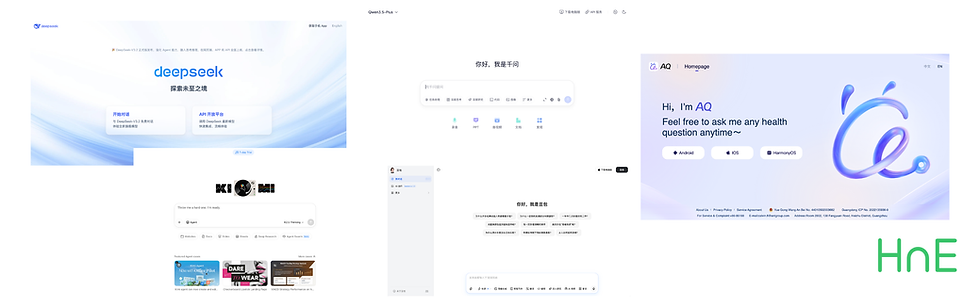
The Chinese New Year holiday has just ended, a period that traditionally reveals the latest industry trends through high-budget TV commercials and holiday campaigns. This year, one message was clear: AI tools dominated the advertising landscape in China.
What you'll learn in this article:
This reflects a deeper shift.
China’s marketing environment is no longer simply “digital-first”, it has become AI-native.
For both domestic and international brands, success in China no longer depends solely on having accounts on platforms like WeChat or Douyin. Instead, it depends on how effectively brands are understood and recommended by AI systems, which now act as the new gatekeepers to Chinese consumers.

From Search Engines to AI Answers
In the past:
People searched Google (globally) or Baidu (in China).
During the social media era, they turned to Instagram, Facebook, WeChat, or RED Note (Xiaohongshu) for product recommendations.
Today, consumer behavior has shifted again.
Users increasingly ask AI directly:
“Which yoga studio should I choose in Shanghai?”
“What is the best Chinese supplier of industrial sensors?”
At the same time, social platforms have integrated AI features. Search results are no longer ranked posts, they are AI-generated summaries of multiple data sources.

This means:
If AI does not recognise or understand your brand, your brand effectively does not exist.
This is why GEO (Generative Engine Optimization) is becoming more important than traditional SEO, both globally and in China.
What is Chinese AI marketing?
Chinese AI marketing focuses on ensuring that AI tools:
recognize your brand;
understand what your product does;
recommend it in relevant user queries.

If a user asks:
“Which brand provides high-quality industrial sensors in China?”
“Which Yoga studios you suggest in Shanghai?”
Whether your brand appears in that answer determines whether you are even considered by the customer.
Without AI visibility, your brand is invisible in the new decision-making process.
The Three Layers of Chinese AI Marketing
Chinese AI marketing operates across three key layers:
Techonology Layer
Brands must structure their data so AI systems can crawl and interpret it.
Best practices include:
Deploy the knowledge graph in standard RDF/JSON-LD format to the /kg directory at the root of the official website.
Include it in robots.txt and the sitemap to ensure accessibility for Deepseek, Kimi, Doubao, and other AI crawlers.
Content Layer
Content must be machine-readable, not just human-readable.
Brands should:
Embed Schema.org structured data (Product, Organization, FAQPage, etc.)
Apply structured data to websites, PR articles, and social content
Clearly define:
who the brand is
what the product does in which scenarios it is used
what problems it solves
This helps AI systems generate accurate brand-related answers.
Management&Freshness Layer
AI models prioritize up-to-date, reliable data.
Brands should:
Regularly update customer cases
Add awards and certifications
Publish new technical upgrades
This maintains a strong “freshness signal” and increases the likelihood of being cited in AI responses.
Because AI recommendations now directly influence purchase decisions, AI visibility has become part of the sales funnel itself.
Why GEO Matters More Than Traditional Digital Marketing?
Traditional digital marketing focuses on social media, paid ads, influencer campaigns and etc. But AI-driven discovery introduces a new reality: Brand exposure increasingly happens inside AI answers, not feeds.
Therefore, brands that invest only in social media marketing risk losing visibility in AI-based consumer journeys.
Winning in China’s future market means: Feeding AI systems the right structured information, not just publishing content for human users.
What is the latest AI trends in the Chinese market?
Since 2024, consumer-facing AI tools have grown rapidly in China:
Kimi – for students, lawyers, and researchers
Qwen – focused on e-commerce operations
Doubao – entertainment and image/video creation
Antafu – medical consultation support
DeepSeek, Yuanbao, Baidu ERNIE – general-purpose AI assistants
Each serves different user needs and verticals.
As a result, more Chinese companies are now actively “training” AI systems using localized content to increase brand exposure in AI-generated answers.
Real-World Case Studies: Chinese AI marketing in Action (2026)
As a result, an increasing number of Chinese companies and brands are actively “feeding” AI systems with localized, high-quality Chinese content so that these systems can better understand their products and services. By doing so, brands increase the likelihood that their offerings will be selected and recommended in AI-generated answers, effectively raising their product exposure at key decision moments for potential customers.
For example, a biotechnology company significantly improved its visibility in AI tools by implementing AI-oriented content strategies. When users search for queries such as “Which brand is best for preservatives?” or “Premium industrial cleaning agents and mold removers,” the company now appears consistently in AI-generated recommendations.
Similarly, a painting studio in Beijing adopted an AI marketing approach. As a result, when users ask questions like “Which painting studio is the strongest in Beijing?” or “Top-ranked painting studios in Beijing,” this studio is prominently surfaced in AI responses.
These cases demonstrate that AI visibility is no longer driven solely by advertising or social media presence, but by how well a brand structures and localizes its information for AI systems to interpret and recommend.
Summary
The New Era of "Algorithmic Trust" as we move further into 2026, the boundary between "searching" and "conversing" has officially dissolved. For international brands, the "China Challenge" has evolved: it is no longer just about breaking through the Great Firewall or navigating cultural nuances, it is about winning Chinese Algorithmic Trust.
Traditional digital marketing was built on the "Attention Economy”, buying eyeballs through ads and influencers. But GEO is built on the "Information Economy." In this new landscape, the winner is not necessarily the brand with the biggest ad budget, but the brand that provides the most structured, credible, and "machine-readable" data to China’s leading LLMs (Large Language Models) like DeepSeek, ERNIE, and Qwen.
If your brand story isn't being told by the AI assistants in the pockets of 1.4 billion consumers, you aren't just losing market share, you are becoming invisible. The transition from being "searchable" to being "citable" is the single most important pivot for global marketers this year.


Comments